Navigating Market Volatility: Why Staying Invested Through Downturns Is Critical For Your Retirement
When the stock market takes a sudden dive, it’s natural to feel alarmed. Your hard-earned retirement savings seem to be evaporating before your eyes, triggering a powerful urge to pull your money out and protect what’s left.
But that emotional reaction could cost you dearly in the long run.
As we explore this critical aspect of retirement planning, you’ll discover why knee-jerk reactions to market downturns can be destructive to your financial future. You’ll also learn strategies to help you weather market storms with confidence.
The Costly Mistake of Panic Selling
One of the biggest mistakes investors make is withdrawing money from the stock market during downturns. This mistake can be particularly devastating as you approach retirement.
Think about this scenario: You’ve diligently saved for retirement, but when the market drops 40%, fear takes over. You pull your money out to protect what’s left.
Let’s say you have a million dollars in an account, the market turns down, and you have a 40 percent loss. So you lose 400,000 dollars because the stock market goes down. Now you have 600,000 dollars.
But here’s where the problem compounds:
Even when you have those positions that are at a loss, Uncle Sam says “sorry, you still need to take that required minimum distribution.” And so you may be forced to sell stocks at a loss just to take that required minimum distribution.
The Devastating Effect of Selling Low
When you sell during a market decline, you’re essentially locking in your losses. This creates a permanent setback that can be nearly impossible to recover from.
So, let’s say you took $50,000 out of your portfolio. So now, instead of $600,000, you have $550,000. And now, let’s even say that the stock market starts going back up. You may get back up to $600,000 or maybe $650,000, but you’re not back up to a million dollars.
This is what financial advisors often call a “weapon of mass destruction” for your retirement portfolio. When you’ve sold at a loss, you miss out on the market’s eventual recovery.
The Reality of Market Volatility
It’s important to understand that market volatility is normal. The stock market has experienced significant drops throughout history, but it has always recovered over time.
We’ve seen it the last several years when there are wild swings in the stock market, like in COVID, and then it came rocking back up, or in 2022 or 2025, when all the stock market indexes were down, it can throw your portfolio out of balance.
These swings aren’t just inconvenient—they’re expected. But many investors make the mistake of reacting to short-term fluctuations instead of staying focused on long-term goals.
Understanding Your Risk Tolerance
One of the most important aspects of successful retirement planning is understanding your risk tolerance. Many investors don’t truly understand how much risk they’re taking.
We have the opportunity to meet with hundreds of families every year. And 99% of the time, they’re taking far more risk than they know or than they need to take at this stage of the game.
This disconnection between perceived risk and actual risk can lead to poor decision-making during market downturns.
We see this conflict. They’re saying, I don’t want to lose a penny of money, but then we look at their investment portfolio, and it screams something completely different.
Investing with Your Age in Mind
As you get closer to retirement, your investment strategy should evolve. You simply have less time to recover from major market downturns.
The closer you are to retirement, the less time you have to recover from any major financial setbacks.
This doesn’t mean you should avoid the stock market completely. Instead, it means your portfolio should be properly balanced based on your age, goals, and risk tolerance.
The Problem with One-Size-Fits-All Investment Rules
Many investors follow outdated rules of thumb for asset allocation, like the “100 minus your age” rule for stock market exposure. These simplistic approaches fail to account for individual circumstances.
Many people rely on some one-size-fits-all strategy like the traditional 60-40 rule or what it’s described as: you take a hundred and minus your age in stocks, and that’s the risk you should be taking. Unfortunately, these traditional rules were invented so long ago, and the economic landscape has changed dramatically.
A personalized approach is essential for navigating today’s complex financial landscape.
The Importance of Regular Portfolio Rebalancing
One of the most effective ways to manage market volatility is through regular portfolio rebalancing. Yet, many investors neglect this critical step.
Investing is never a set it and forget it type of one-time thing. You should update and rebalance your portfolio probably every 6 to 12 months or every time there’s a major shift in the stock market or a major life event that happens.
Rebalancing ensures your investments stay aligned with your goals and risk tolerance, especially during times of market volatility.
The Wisdom of Warren Buffett
When it comes to investment philosophy, few voices carry more weight than Warren Buffett’s. His approach to market volatility offers a valuable perspective:
It’s insane to risk what you have in order to obtain what you don’t need.
This wisdom applies perfectly to retirement planning. Taking excessive risks with money you’ll need for basic expenses in retirement simply doesn’t make sense.
The Value of Professional Guidance
Making investment decisions during market volatility can be emotionally challenging. This is where working with a qualified financial advisor becomes invaluable.
So many advisors out there do not even bring social security planning in as part of their system. That is a big mistake. Don’t be one of those Americans who leave tens of thousands, if not hundreds of thousands of dollars on the table.
A comprehensive approach to retirement planning considers all aspects of your financial life—not just investments but also taxes, Social Security, healthcare costs, and more.
The Importance of a Comprehensive Financial Plan
Having a solid financial plan can help you stay focused on long-term goals during market turbulence. Without one, you’re vulnerable to making emotional decisions.
If you retire during a strong economy and the stock market’s growing, well, you’re on easy street, and the wind is at your back. But if you retire during a downturn in the economy or when there’s stock market volatility, that’s a totally different story. And that’s when saving and investing alone are no longer enough. You need a comprehensive game plan. Otherwise, you’re just setting yourself up to fail.
A well-constructed retirement blueprint provides the confidence to weather market storms without panic.
Understanding Your Entire Financial Picture
When making investment decisions, it’s crucial to consider your complete financial situation—not just your investment accounts.
This is especially important when deciding how to manage your investments during market volatility.
The Benefit of a B.O.S.S. Retirement Analysis
If you’re concerned about how market volatility might affect your retirement plans, a customized analysis can help you gain clarity.
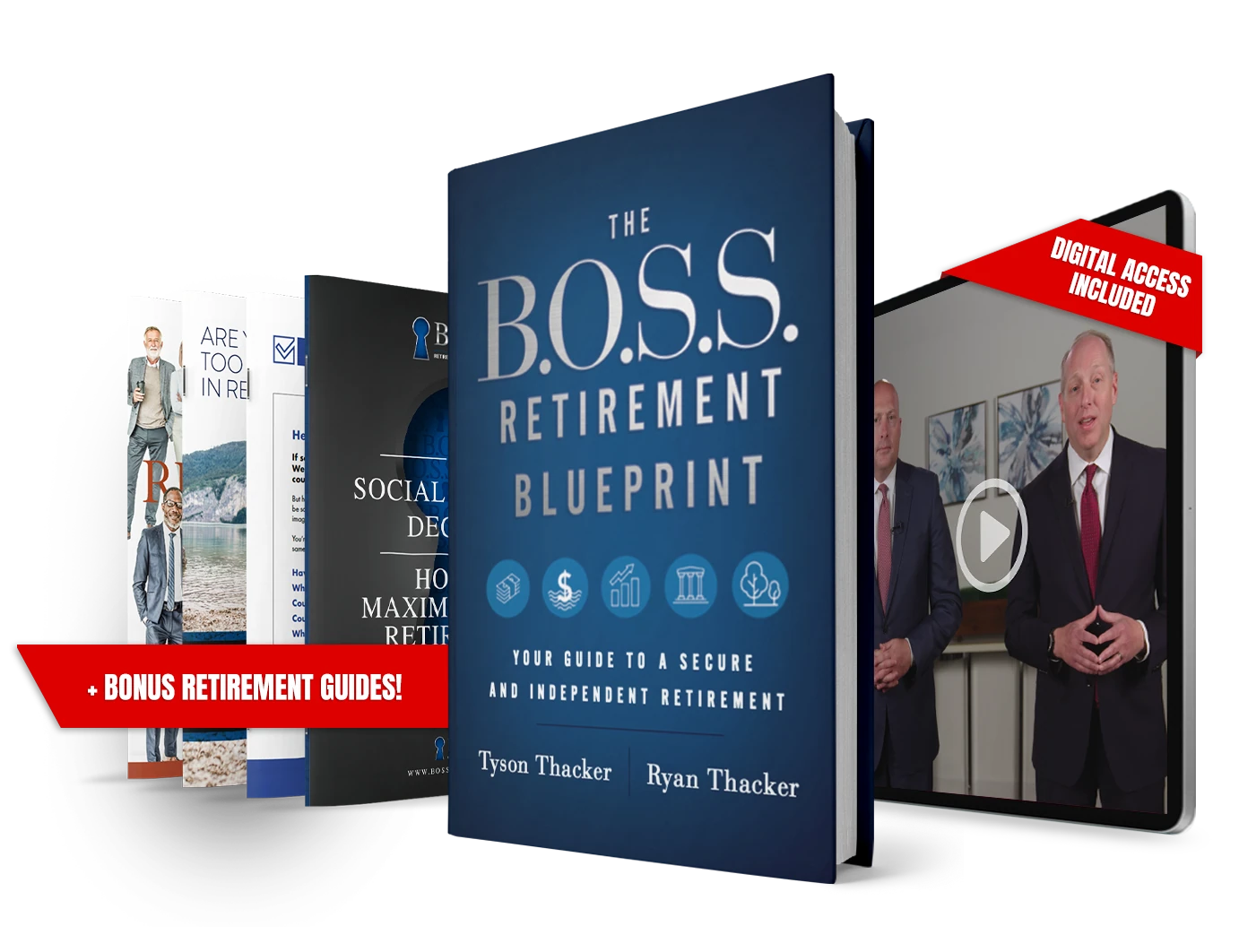
The B.O.S.S. Retirement Blueprint™ could be the single most important tool that could help your money go a lot further in retirement. This is your opportunity to have a comprehensive financial game plan. A plan that covers the most important pillars of retirement planning, including taxes, social security, health care, income, IRAs and 401ks, and more.
This comprehensive approach ensures that all aspects of your retirement are considered—not just your investments.
The Real-World Impact of Professional Guidance
The difference between having professional guidance and going it alone can be substantial. Consider this example:
When we do the B.O.S.S. retirement tax analysis for them and start the process of tax planning, we’re able to see that Bob and Carol owe $572,000 in taxes to Uncle Sam on their million-dollar IRA.
Through proper planning and guidance, these unnecessary tax burdens can often be minimized, allowing you to keep more of your hard-earned money.
Investment Risk in the Context of Your Entire Retirement Plan
Market volatility doesn’t exist in isolation. It’s just one factor in your overall retirement plan.
Everything with retirement planning is connected. They have a domino effect. One thing affects another. For example, you can’t talk about income without talking about Social Security. And you can’t talk about social security without talking about your IRA and 401(k) withdrawals because that could impact what’s happening in your taxes when you take those withdrawals from your IRAs and 401ks.
This interconnected nature of retirement planning is why a holistic approach is so important.
A Lesson from Ed Slott
America’s IRA expert Ed Slott offers an important perspective on retirement accounts that relates directly to market volatility:
They’re called the IRS’s weapons of mass destruction. And for a good reason.
If you’re like most Americans, you’re probably saving for retirement in a tax-deferred account.
Understanding both the investment risk and tax implications of your retirement accounts is critical for long-term success.
Taking Action Now
If you’re concerned about how market volatility might affect your retirement, now is the time to get a professional assessment of your situation.
If you retire during a strong economy and the stock market’s growing, well, you’re on easy street, and the wind is at your back. But if you retire during a downturn in the economy or when there’s stock market volatility, that’s a totally different story. And that’s when saving and investing alone are no longer enough. You need a comprehensive game plan.
A customized analysis can help you determine if your current investment strategy aligns with your retirement goals.
The B.O.S.S. Retirement Blueprint™: Your Path Forward
The B.O.S.S. Retirement Blueprint™ provides a comprehensive roadmap for navigating retirement planning, including strategies for managing market volatility.
We will create a customized financial game plan for you. We call it the B.O.S.S. Retirement BlueprintTM. This is a plan that could stand up to the toughest challenges that you’ll face in retirement, and we won’t charge you anything for it.
This comprehensive approach ensures you have the guidance needed to make informed decisions—even during market turbulence.
Market Volatility and Investing
Market volatility is an inevitable part of investing, but it doesn’t have to derail your retirement plans. By understanding the dangers of emotional decision-making and adopting a long-term perspective, you can navigate market downturns with confidence.
Working with experienced financial advisors who focus on comprehensive planning rather than just selling products can make all the difference in your retirement journey.
Don’t let market fluctuations drive your investment decisions. Instead, develop a solid plan that accounts for market volatility and keeps you focused on your long-term goals.
Learn how you could make your money go a lot further in retirement with this free customized B.O.S.S. Retirement Blueprint™. If you have saved at least $200,000 for retirement, click here to schedule your initial analysis or call 800-637-1031.
Get your free B.O.S.S. Retirement Blueprint™ today and discover how you can protect your retirement from market volatility while maximizing your financial future.
The Retirement You Deserve Starts Here
Request your complimentary retirement planning toolkit today!
Ready to Take The Next Step?
For more information about any of the products and services listed here, schedule a meeting today or register to attend a seminar.